Water plays a surprisingly important role in the day-to-day running of a commercial property. Hotels need it for guest rooms and laundry, restaurants rely on it for kitchens and cleaning, and manufacturing facilities may use large amounts of water for equipment and production. When that water is hard, the effects can slowly become expensive.
Hard water contains minerals such as calcium and magnesium. Over time, those minerals can settle inside pipes, heaters, boilers, dishwashers, and other equipment. The problem rarely appears overnight. Instead, efficiency gradually drops, maintenance becomes more frequent, and someone eventually asks the frustrating question: “Why is this equipment having so much trouble?”
Understanding the Impact of Hard Water
In a small home, mineral deposits might mean a few spots on a shower door. In a commercial environment, the scale of the problem can be much larger simply because the volume of water is higher.
A restaurant may run dishwashers dozens of times each day. A hotel can have hundreds of showers, sinks, and laundry cycles. Industrial facilities may operate water-dependent machinery for long periods. With that level of use, even moderate hardness can create noticeable buildup.
Scale buildup can restrict water flow and interfere with heat transfer. When deposits form inside heating equipment, the system may need more energy to produce the same results. That extra effort might not look dramatic on a single day, but over months and years, it can affect operating expenses.
Why Commercial Water Softeners Matter
Residential softeners aren’t always designed to handle the demands of a busy business. Commercial properties often experience higher flow rates, greater water consumption, and periods of intense usage that require a system capable of keeping up.
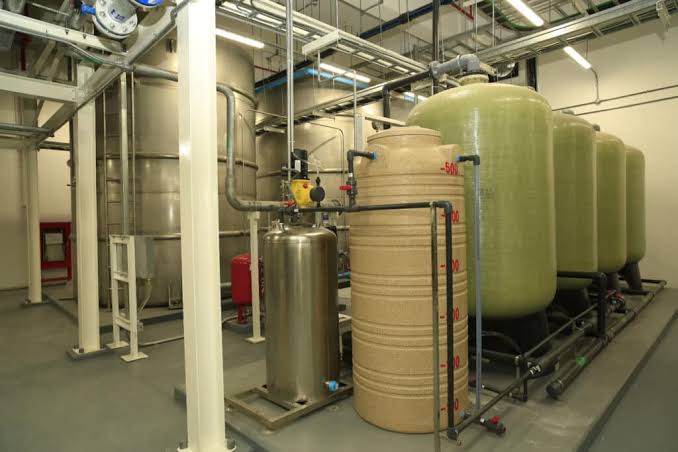
That’s why high-capacity commercial water softeners are often considered for facilities with significant water demands. These systems are built to process larger volumes and are typically available in configurations suited to different commercial applications.
However, bigger isn’t automatically better. A system that is too small may struggle during peak demand, while an oversized unit can cost more than necessary and may not operate as efficiently as expected.
Proper sizing is the important part.
Getting the Capacity Right
Choosing a softener should begin with actual water usage rather than guesswork. Facility managers need to consider daily consumption, peak flow, water hardness, the number of fixtures, and the type of business.
A hotel, for instance, has a very different water profile from a small office building. A restaurant may have high usage during specific hours, while a manufacturing plant might require a more consistent flow throughout the day.
Working with a qualified water-treatment professional can help determine the appropriate capacity. The goal is to make sure the system can handle busy periods without unnecessarily increasing equipment size or maintenance requirements.
How Softening Can Protect Equipment
Commercial equipment isn’t cheap. Water heaters, boilers, laundry systems, commercial dishwashers, and specialized machinery can represent significant investments.
Hardness minerals can accumulate inside these systems and create operational problems. When deposits interfere with heat transfer, equipment may have to work harder. In some cases, restricted flow can also affect performance.
Reducing hardness doesn’t guarantee that equipment will never have problems, but it can address one common source of mineral-related stress. That makes water softening an important part of a broader maintenance strategy for many facilities.
Thinking About Equipment Lifespan
Every business wants its equipment to last as long as possible. Replacing a major machine earlier than expected can disrupt operations and create an unexpected expense.
A properly selected water softener may help support equipment lifespan by reducing the mineral deposits associated with hard water. The exact benefit depends on the equipment, water conditions, maintenance schedule, and how heavily everything is used.
It’s important not to think of softening as a magic shield. Regular servicing, cleaning, inspections, and proper operation are still necessary. Water treatment works best as one part of a complete maintenance plan.
Maintenance Is Part of the Investment
A commercial softener needs regular attention. Salt levels, valves, resin performance, regeneration settings, connections, and other components may need to be checked depending on the system.
Ignoring maintenance can undermine the very benefits the equipment was installed to provide. A poorly maintained softener may not perform as intended, and problems can become harder to diagnose later.
Facility managers should keep service records and follow the manufacturer’s recommendations. It doesn’t have to be complicated. A basic maintenance calendar can go a long way.
Consider More Than the Purchase Price
The upfront price of a water softener is only one part of its total cost. Businesses should also consider installation, maintenance, salt or treatment materials, water consumption during regeneration, replacement parts, and professional servicing.
A cheaper system isn’t necessarily the better bargain if it requires frequent attention or cannot keep up with demand.
Instead, look at long-term value. A reliable system that is properly sized and reasonably efficient may deliver better results over its working life, even if the initial investment is somewhat higher.
Testing the Water Before Choosing Equipment
Before purchasing any commercial softener, test the incoming water. Hardness levels can vary significantly between locations, and hardness may not be the only water-quality concern.
A water test can help identify whether additional treatment may be needed. Sediment, iron, chlorine, or other characteristics could require different technologies.
This step also prevents businesses from treating a problem they don’t actually have. Good water treatment starts with information, not assumptions.
A Smarter Long-Term Approach
Commercial water softening isn’t about installing the biggest system possible. It’s about matching the equipment to the property’s actual needs and keeping it maintained over time.
For businesses that use substantial amounts of water, reducing hardness can support cleaner equipment, more consistent operation, and potentially fewer mineral-related maintenance problems. The key is to look at the full picture: water quality, usage patterns, system capacity, maintenance, and long-term value.
When the right softener is quietly doing its job in the background, employees don’t have to think about it every day. And that’s usually a good sign. The best water-treatment system is often the one that simply keeps the business moving without becoming another problem to manage.