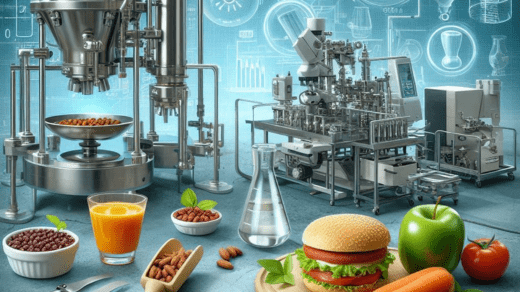
In the ever-evolving landscape of industrial food technology, cutting-edge advancements are transforming the way we process, package, and preserve food. These innovations not only enhance efficiency and safety but also significantly improve the quality and sustainability of food products. In this article, we explore the latest developments in food technology products and instruments that are reshaping the industry.
Revolutionary Food Processing Technologies
High-Pressure Processing (HPP)
High-Pressure Processing is a non-thermal method of preserving and sterilizing food, which uses high pressure to inactivate pathogens and extend shelf life. Unlike traditional methods, HPP retains the nutritional and sensory qualities of food, making it a preferred choice for premium products.
Ultrasonic Food Processing
Ultrasonic processing employs high-frequency sound waves to enhance various food processing techniques such as emulsification, extraction, and crystallization. This technology improves process efficiency, reduces energy consumption, and enhances product quality.
Pulsed Electric Fields (PEF)
PEF technology uses short bursts of high voltage to permeabilize cell membranes in food, improving the extraction of juices, enhancing the drying process, and ensuring microbial safety. This method is particularly effective in preserving the natural flavors and nutrients of fresh produce.
Innovative Food Packaging Solutions
Active Packaging
Active packaging involves the incorporation of substances that interact with the food or its environment to extend shelf life and maintain quality. Examples include oxygen scavengers, moisture absorbers, and antimicrobial agents that actively protect the product from spoilage.
Intelligent Packaging
Intelligent packaging systems provide real-time information about the condition of the food product. These systems can monitor temperature, pH levels, and freshness, ensuring optimal storage conditions and reducing food waste. Smart labels and RFID tags are commonly used in this technology.
Biodegradable and Edible Packaging
With a growing focus on sustainability, biodegradable and edible packaging solutions are gaining popularity. These packaging materials are derived from natural sources such as starch, cellulose, and proteins, reducing environmental impact and enhancing product appeal.
State-of-the-Art Food Technology Instruments
Spectroscopy Instruments
Spectroscopy instruments, including near-infrared (NIR) and Fourier-transform infrared (FTIR) spectrometers, are essential for analyzing the composition and quality of food products. These tools provide rapid, non-destructive analysis, ensuring consistent product quality and safety.
Rheometers and Texture Analyzers
Rheometers and texture analyzers measure the physical properties of food, such as viscosity, elasticity, and firmness. These instruments are crucial for quality control and product development, helping manufacturers create products with desired textures and consistencies.
Advanced Chromatography Systems
Chromatography systems, such as high-performance liquid chromatography (HPLC) and gas chromatography (GC), are used for separating, identifying, and quantifying components in food samples. These systems are vital for detecting contaminants, verifying ingredient authenticity, and ensuring compliance with regulatory standards.
The Future of Industrial Food Technology
3D Food Printing
3D food printing is an emerging technology that enables the creation of customized food products with precise nutritional content and intricate designs. This technology holds great potential for personalized nutrition, food sustainability, and innovative culinary experiences.
Internet of Things (IoT) in Food Manufacturing
The integration of IoT in food manufacturing allows for real-time monitoring and control of production processes. IoT devices can track equipment performance, monitor environmental conditions, and optimize resource usage, leading to improved efficiency and reduced operational costs.
Artificial Intelligence and Machine Learning
Artificial Intelligence (AI) and Machine Learning (ML) are revolutionizing food technology by enabling predictive maintenance, quality control, and supply chain optimization. AI algorithms can analyze vast amounts of data to identify patterns and trends, enhancing decision-making and operational efficiency.