
Category: Finance

  • From Ownership to Liquidity: Selling ESOP Shares and What You Need to Know

    From Ownership to Liquidity: Selling ESOP Shares and What You Need to Know

    Employee Stock Ownership Plans (ESOPs) have emerged as a famous device for Indian startups and companies to incentivize employees and align their interests with the company’s growth. However, expertise in the journey from possession to liquidity is critical for employees holding ESOP shares. This article delves into the process of selling ESOP stocks and highlights the recent example of Flipkart to demonstrate liquidity activities.

    ESOPs provide ownership and a financial incentive to the business enterprise’s achievement. However, while receiving ESOPs can be thrilling, understanding a way to release liquidity from these stocks is crucial for maximizing their value.

    What Are ESOPs?

    ESOPs are a worker advantage plan that offers personnel the right to shop for shares inside the enterprise at a predetermined price, frequently lower than the market. ESOPs are typically granted as part of a reimbursement bundle deal, presenting personnel with an ownership stake inside their enterprise.

    In startups, ESOPs are mainly common, as they help align personnel’s interests with the business enterprise’s prolonged-time period desires. Employees are more invested in the commercial enterprise organization’s fulfillment, which can pressure average performance and engagement. However, the economic value of ESOPs is simplest realized when personnel are capable of selling their shares through a liquidity event.

    The Journey from Ownership to Liquidity

    While owning ESOP stocks is a sizeable financial incentive, personnel must undergo several ranges before they can convert this possession into actual liquidity:

    1. Granting of ESOPs: Employees are granted ESOPs as a part of their compensation package deal. These options generally vest over a period of time, which means employees earn the right to workout their options and buy shares incrementally.

    2. Vesting Period: The vesting period is the time over which employees earn their ESOPs. During this time, employees gradually earn the right to exercise a portion of their ESOPs. For example, an organization provides ESOPs that vest over four years, with 25% vesting each year.

    3. Exercise of Options: When the options have vested, employees can work out them, which means they can buy shares at the predetermined exercise price set as per the organization’s ESOPs setup rule. This price is typically lower than the market fee, offering a right away economic gain.

    4. Holding Period: After exercising their options, employees preserve the shares. During this era, the price of the stocks can fluctuate based on the enterprise’s performance and marketplace conditions.

    5. Liquidity Event: A liquidity occasion is an opportunity for personnel to sell their stocks and comprehend their cost. This can occur via diverse manners, inclusive of an initial public offering (IPO), acquisition, or buyback

     — Initial Public Offering (IPO): When a company is going towards a mainboard IPO, personnel can sell their shares on the open marketplace.

     — Acquisition: If the company is obtained, the acquiring company might work out the employees’ shares as part of the deal.

    — Buyback: Companies may additionally provide to shop for again stocks from employees, offering immediate liquidity.

    How Does Selling to an ESOP Unlock Liquidity?

    One of the principal reasons commercial enterprise proprietors recall promoting to an ESOP is the opportunity to free up liquidity. As proprietors are trying to find an exit, they could sell all or part of their shares to the ESOP, receiving cash or based payouts in return. This lets in for a gradual transition of possession whilst securing liquidity for the vendor. 

    Let’s recognize these liquidity activities with the latest examples in the startup landscape:

    Many Indian startups like Flipkart, Zomato, and Swiggy have embraced ESOPs, supplying extensive possession to employees. But the real mission for employees lies in changing these stocks into cash.

    1. Buyback Opportunities:

    Startups in India generally offer buyback opportunities wherein they repurchase shares from employees. This is a manner for personnel to cash out, although the enterprise isn’t publicly indexed. Buybacks typically take place when a startup has raised huge capital or is near reaching profitability. 

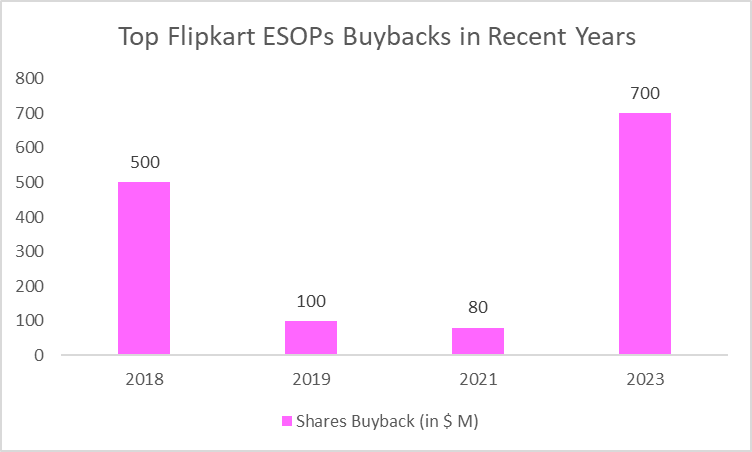
    A recent example of ESOP liquidity befell Flipkart. In July 2023, Flipkart facilitated an enormous Employee Stock Ownership Plan (ESOP) buyback, marking certainly one of the most important such occasions inside the Indian startup ecosystem. Flipkart did a $700 million ESOP buyback, benefiting over 24,000 current and former personnel of Flipkart and Myntra. This buyback is a one-time cash payout to employees who held stock alternatives on Flipkart

    This buyback allowed employees to liquidate their stock alternatives, supplying huge financial profits. For example, PhonePe founders Sameer Nigam and Rahul Chari were predicted to get hold of cash payouts of $20–25 million via liquidating their stock options on Flipkart.
    2. Initial Public Offerings (IPOs):

    For many startups, the closing purpose is an IPO. When an organization is going public, personnel can sell their stocks at the open market. However, IPOs can take years, and employees may need to wait for long periods to realize the price of their ESOPs. 

    In 2021, personnel of Zomato benefited from an especially successful IPO, letting them convert their ESOPs into cash at marketplace cost. This changed into a turning factor for employees who had held stocks for years, highlighting the potential rewards of ESOPs once a company is listed.

    3. Acquisitions and Mergers:

    When a startup is obtained or merges with some other business enterprise, it often triggers an event wherein personnel can sell their stocks. In such eventualities, obtaining corporations generally offer to buy returned stocks as part of the deal.

    Flipkart’s Acquisition through Walmart: Flipkart employees reaped large rewards when Walmart acquired the company. Walmart bought ESOPs from employees, offering extensive returns for folks who had stocks inside the corporation. This acquisition became a model for Indian startups, showcasing the blessings of preserving ESOPs for the duration of main transactions.

    Key Factors: What You Should Consider When Selling ESOPs 

    While the concept of proudly owning stocks and gaining liquidity is attractive, promoting ESOPs isn’t usually truthful. There are certain points:

    1.  Tax Implications   

    ESOPs are subject to taxation under two main events:

    — At the time of exercise: Employees are taxed on the distinction between the exercising rate (the rate at which they purchase the shares) and the fair marketplace price of the shares.

    — At the time of sale: If the shares are sold for greater than the honest marketplace fee, the worker is taxed at the capital profits. Short-time period or lengthy-time period capital gains tax is relevant, depending on the holding duration.

    1. Liquidity Windows   

    Liquidity windows, where companies offer to buy back shares, are typically limited. Startups may not offer these opportunities every year, so employees need to stay informed and make strategic decisions about when to sell their shares.

    1. Market Conditions:

    The value of ESOPs is associated with the company’s valuation. For employees in Indian startups, market conditions play a significant role in determining when the company offers liquidity or goes public. A downturn in the market might delay these opportunities.

    1. Vesting Periods:   

    Employees want to complete the vesting duration before they are able to exercise their ESOPs. Typically, vesting schedules unfold over 4-five years, which means employees ought to remain with the employer for a fixed period before they are able to promote their stocks.

    1. Seek Professional Advice: Understanding the approach of ESOPs, liquidity events, and tax implications can be complex. Professional financial or legal recommendations can help personnel make more knowledgeable choices approximately while exercising their options and promoting their stocks.

    Conclusion

    ESOPs are an appealing advantage for personnel, presenting a direction to ownership and financial rewards tied to the organization’s achievement. However, the adventure from receiving ESOPs to understanding liquidity involves multiple tiers and calls for careful making of plans. Employees have to understand the phrases in their ESOPs, navigate the tax implications, and preserve a watch on liquidity occasions like IPOs, acquisitions, or buybacks.

    As the Indian startup ecosystem evolves, liquidity occasions like Flipkart’s current buyback turn into extra common, providing personnel greater opportunities to sell their stocks and unencumbered the cost of their ESOPs. By staying informed and looking for the proper recommendation, personnel could make the most of their ownership stakes and attain their financial desires.


  • Premature Withdrawal of Fixed Deposits: Pros and Cons

    Premature Withdrawal of Fixed Deposits: Pros and Cons

    For decades, Fixed Deposits (FD) have remained a popular investment choice among Indian households, offering safety on the capital amount and guaranteed fixed returns. However, during a financial crisis, it may be necessary to break the FD before the date of maturity in order to access the funds. This process of withdrawing funds from FD before maturity is called a premature withdrawal, and it comes with its own sets of advantages and drawbacks that must be considered.

    Pros of premature withdrawal of FDs

    Offers financial assistance in tough times: The most significant benefit that comes with premature withdrawal is that it offers access to funds quickly during unforeseen circumstances. Whether it is a medical emergency, job loss, or any other financial crisis, the ability to prematurely break your FD provides a valuable financial backup.

    Reinvesting into a better FD: Fixed deposit interest rates can fluctuate over time depending upon a variety of factors. If the FD interest rates increase significantly after you have locked in an FD at a subpar interest rate, it can be a wise idea to break the FD prematurely and invest in higher-interest FDs, as they can offer better returns in the long run. You can use a fixed deposit calculator to understand whether to continue your FD or break it and reinvest for better returns.

    Paying off debt: Another justifiable reason for premature fixed deposit withdrawal is to pay off debt, especially high-interest debt. Paying off high-interest debt such as credit card dues and personal loans can help you save significantly on interest payments, thus improving your overall finances in the long run.

    If you want to open a new fixed deposit or break your FD to reinvest for better returns, consider the online fixed deposits offered by IndusInd Bank. The IndusInd Bank Fixed Deposits offer a variety of features and benefits, such as:

    ●      Book your FD online in just 3 simple steps using video KYC

    ●      Earn best-in-class interest rates for higher returns on your investment

    ●      Auto-renewal option along with multiple interest payout options

    ●      Book a 5-year tax-saver FD to help save on taxes while earning interest income

    ●      Manage your FD easily using IndusInd Bank’s IndusMobile app

    Cons of premature withdrawal of FDs

    Penalty on interest: The primary drawback when it comes to early withdrawal of fixed deposits is the penalty on interest earnings that are imposed by the bank. Generally, the bank will deduct around 0.5% to 1% from the applicable interest rate in the form of a penalty, resulting in reduced earnings, especially if the FD is closer to maturity.

    Losing compound interest: When it comes to long-term FDs, breaking them prematurely will not only result in a penalty on the interest but also disrupt the compounding process, which can result in significantly reduced returns over time.

    Financial imbalance: Many people use fixed deposits for specific milestone financial goals, such as saving up for a home down payment, saving up for kids’ education, etc. Breaking FDs prematurely results in these plans getting derailed or delayed, messing up your financial planning.

    Key considerations

    Here are some things to consider before breaking your FD prematurely:

    ●      Many banks offer loans against FD, so check if you can get a loan against an FD to take care of your financial needs without prematurely breaking it.

    ●      Some banks also allow depositors to partially withdraw from an FD. If you only need a small amount of money compared to your FD, consider withdrawing the necessary funds while keeping your remaining investment intact.

    ●      Consider building a separate emergency fund to deal with emergency expenses so that you do not have to prematurely break your FD.

    To conclude

    There are both pros and cons to prematurely withdrawing funds from a fixed deposit. While it offers quick access to funds in the short term, the costs in terms of reduced returns and missed long-term growth can be substantial. So, it is important to weigh the immediate benefits of breaking your FD against the long-term impact on your financial goals. Only after careful consideration should you choose to prematurely withdraw funds and for a justified purpose.

  • Navigating Demat Account Fees – A Comprehensive Breakdown of Charges for 2024

    Navigating Demat Account Fees – A Comprehensive Breakdown of Charges for 2024

    Introduction

    By mid-2024, the demat account landscape in India had seen a notable transformation, with the total number surpassing 16 crores. This surge reflects the increasing interest in investing, trading, and participating in IPOs. However, with this growth comes a variety of fees and charges that investors should be aware of. This article provides a detailed breakdown of the current demat and trading charges, including recent changes in Securities Transaction Tax (STT) and SEBI turnover fees, to help you make informed decisions about your investments.

    1. Account Opening Charges

    The initial cost of opening a demat account is a crucial consideration. These charges are often one-time fees that can vary widely between brokers. Some firms offer promotional offers, such as waiving account opening fees, while others might bundle the demat account with trading and banking services at a discounted rate. For instance, brokers like Angel One offer free demat account opening, which can be an attractive option for new investors looking to minimize upfront costs.

    2. Annual Maintenance Charges (AMC)

    Annual Maintenance Charges (AMC) are periodic fees required to keep your demat account active and operational. This fee can range from Rs. 250 to Rs. 750 per year, depending on the broker. Some brokers may charge AMC on a quarterly basis rather than annually. It’s essential to compare these charges when choosing a broker, as they can impact your overall investment costs. Understanding the AMC structure of various brokers can help you find the most cost-effective solution for your needs.

    3. Brokerage Fees

    Brokerage fees are one of the most significant expenses for active traders. These fees are charged per transaction and can be structured in several ways: a flat rate, a percentage of the transaction amount, or a combination of both. Full-service brokers might charge a percentage, such as 0.5% of the transaction value, while discount brokers may offer a flat fee per trade, like Rs. 10. For example, if a stock offers zero brokerage for life across various products, including delivery and intraday trades, with a one-time account opening charge of Rs. 999 plus taxes, comparing brokerage fees is crucial to ensuring you’re getting the best deal for your trading style.

    4. Understanding STT and Exchange Fees:

    The Securities Transaction Tax (STT) is levied by the government on securities transactions. As of 2024, the STT rate on equity delivery transactions is 0.1% for both buy and sell transactions, while for equity intraday transactions, it is 0.025% on the sell side. Recently, the Finance Minister proposed increasing the STT on the sale of options and futures in the upcoming budget. This proposed increase, effective October 1, 2024, may impact your trading costs if you deal in these instruments.

    In addition to STT, exchange fees are charged by stock exchanges like the NSE and BSE. For example, the NSE charges 0.00322% on equity transactions and 0.0495% on option premiums. These fees are generally small but can accumulate over numerous trades.

    5. SEBI Turnover Fees

    SEBI turnover fees are charged by the Securities and Exchange Board of India (SEBI) based on the turnover of your transactions. This fee is levied at Rs. 10 per crore of turnover. Although this fee may appear small, it can accumulate significantly, particularly for traders with high transaction volumes. Grasping this fee is crucial for effectively managing your total trading costs.

    6. Depository Participant (DP) Charges

    Depository Participants (DPs), such as NSDL and CDSL, are responsible for maintaining your securities in an electronic format. They charge fees for transactions where shares are debited from the demat account, typically on a per-scrip basis. The cost can differ based on the depository participant and the quantity of shares being sold. It’s advisable to review these charges before opening a demat account, especially if you frequently trade in smaller quantities.

    7. Pledging charges

    If you need to pledge shares to secure a loan, brokers will charge a fee for both the pledging and removal of the pledge. This fee varies among brokers and can impact your overall cost of borrowing against your securities.

    8. Payment Gateway Charges

    When transferring funds to your trading account, brokers may levy a payment gateway fee, although transfers through UPI are typically free. This charge is relatively minor but worth noting if you frequently fund your account through various payment methods.

    9. Goods and Services Tax (GST)

    An 18% GST is levied on all service fees charged by brokers. This includes brokerage fees, account maintenance charges, and other service-related costs. It’s essential to factor this into your overall cost calculations, as it affects the total amount you pay for trading and maintaining your demat account.

    Conclusion

    Managing demat and trading charges can be challenging, but gaining a clear understanding of these costs can help you control your expenses more efficiently. From account opening and annual maintenance fees to brokerage and transaction-related charges, being informed allows you to choose a broker that offers the best value for your needs. If you’re searching for a cost-effective and feature-rich solution, look for the best trading platform in India for beginners to ensure you get the most out of your investment journey. By carefully comparing these charges and features, you can optimize your trading expenses and enhance your overall investment experience.

  • Green Finance and Sustainable Investing

    Green Finance and Sustainable Investing

    Green finance and sustainable finance are types of financial activities that support the transition to a low-carbon economy while addressing global challenges, such as climate change and sustainability risks. Green finance involves financing projects and initiatives that have positive environmental impacts such as reducing greenhouse gas emissions and promoting renewable energy. Sustainable finance integrates environmental, social, and governance factors into investment decisions to promote long-term economic growth, social outcomes, and environmental sustainability. As the world faces the challenges of climate change, environmental degradation, and social inequality, a new era of finance has emerged – green finance. The concept of green finance, sustainable investing, and individuals can contribute to this movement, even with a personal loan in Noida.

    What is Green Finance?

    The key concept of green finance is achieving a sustainable and resilient economy that can address the challenges posed by climate change and promote a transition to the practice of investing in financial instruments and products that promote sustainable development. Green financing is to increase the level of financial flows from banking, micro-credit, insurance, and investment and it’s from the public, private, and not-for-profit sectors. A key part of this is to better manage environmental and social risks, take up opportunities that bring both a decent rate of return and environmental benefit, and deliver greater accountability. Promoting green finance on a large scale helps that green investments are prioritized over business-as-usual investments that perpetuate unsustainable growth patterns. Green finance encourages transparency and long-term thinking of investments.

    Sustainable Investing

    A sustainable financial system creates, values, and transacts financial assets in ways that shape real wealth to serve the long-term needs of an environmentally sustainable economy. investment approach that considers environmental, social, and governance factors in addition to traditional financial metrics. This approach recognizes that long-term financial success is closely tied to a company’s ability to manage risks and opportunities related to ESG factors.  Banks can then provide sustainable loans by incorporating environmental outcomes in risk and pricing audits. investors of Institutional can incorporate ESG factors in selection of portfolio and management to identify risks.

    ESG criteria

     Environmental: climate change, natural resource depletion, and environmental degradation

    Social: working conditions, local communities, conflict, health and safety, employee relations

    and diversity

    Governance: executive pay, corruption, political lobbying and donations, board diversity and structure, and tax strategy

    Personal Loan in Noida: A Chance to Contribute

    Individuals in Noida can contribute to the green finance movement by considering the environmental and social impact of their financial decisions, even when taking out a personal loan. Borrowing money from banks or financial institutions with a strong track record of sustainable lending practices, Noida people can use personal loans to invest in sustainable products or services, such as solar panels or energy-efficient home improvements.

    Benefits of Green Finance

    The benefits of green finance:

    Support sustainable economic growth

    Promote social justice

    Improve resource efficiency

    Enhance long-term financial returns

    Green financing can be promoted through changes in regulatory frameworks, public financial incentives, increases in green financing from different sectors, alignment of public sector financing decision-making with the environmentally Sustainable Development Goals for people in Noida, increase in personal loans in Noida for clean and green technologies, investing for sustainable natural resource-based green economies and climate-smart blue economy. Green finance and sustainable investing are critical components of a sustainable and equitable financial system. the environmental and social impact of their financial decisions, individuals or businesses can contribute and get the benefit of green finance, even with a personal loan in Noida. As the world continues to face the challenges of climate change and environmental degradation, the importance of green finance will only continue to grow.

  • How to Ensure Payroll Accuracy with a Free Paycheck Stub Maker?

    How to Ensure Payroll Accuracy with a Free Paycheck Stub Maker?

    Managing payroll for employees is one of the most critical aspects of running a business. Any inaccuracies in payroll can lead to unhappy employees, legal issues, and even financial losses for a company. Ensuring payroll accuracy is essential, and the use of tools like a free paycheck stub maker can simplify this process significantly.

    In this blog, we’ll explore the importance of payroll accuracy and how a free paycheck stub maker can help ensure error-free payroll management.

    Why Payroll Accuracy Matters?

    Accurate payroll processing is crucial for a variety of reasons:

    1. Employee Satisfaction: Employees depend on timely and accurate payments. Any miscalculations in their paychecks can lead to dissatisfaction, decreased morale, and even legal disputes.
    2. Compliance with Labor Laws: Mistakes in payroll can lead to non-compliance with labor laws. Whether it’s underpaying an employee or failing to deduct the correct amount for taxes, these errors can result in hefty fines or legal penalties for the employer.
    3. Financial Health of the Company: Incorrect payroll management can have a direct impact on a company’s financial health. Overpayments or tax miscalculations can strain the company’s cash flow and cause unanticipated financial issues.

    Common Payroll Challenges

    Before diving into how a paycheck stub maker can assist, it’s essential to understand the common challenges businesses face with payroll:

    • Inconsistent Data: One of the main causes of payroll inaccuracies is inconsistent employee data, such as incorrect hours worked, bonuses, and tax information.
    • Manual Calculations: Relying on manual calculations increases the risk of human error. Simple mistakes in basic arithmetic can lead to significant issues in payroll accuracy.
    • Changing Regulations: Payroll regulations, including tax rates and labor laws, frequently change. Staying updated with these changes and ensuring compliance can be a challenging task.
    • Lack of Transparency: Employees may sometimes have questions about how their paychecks are calculated. Without clear documentation, it can be difficult for them to understand deductions or discrepancies in their payment.

    Benefits of Using a Free Paycheck Stub Maker

    A free paycheck stub maker offers several benefits that can help streamline the payroll process and minimize errors. Here’s how it contributes to payroll accuracy:

    Automated Calculations

    One of the biggest advantages of using a paycheck stub maker is the automation of calculations. These tools automatically compute employee wages, deductions, taxes, and other financial factors based on the input provided. This significantly reduces the possibility of errors that may occur with manual calculations.

    Real-Time Data Entry

    With a paycheck stub maker, you can input real-time data such as hours worked, bonuses, and overtime. The tool will generate a paycheck stub that includes this information, ensuring accurate and up-to-date pay details for each employee. This also helps eliminate inconsistencies in data entry, one of the most common payroll issues.

    Tax Compliance

    Paycheck stub makers typically come pre-programmed to comply with federal, state, and local tax regulations. They automatically calculate and deduct the appropriate taxes from employees’ wages, reducing the risk of tax-related errors. This ensures your business remains compliant with tax laws and helps avoid penalties.

    Transparent Pay Details

    One of the key benefits of using a paycheck stub maker is that it provides transparent pay details for employees. Each paycheck stub clearly shows the breakdown of gross wages, deductions (such as taxes and benefits), and net pay. This transparency fosters trust between employees and employers and can help reduce payroll-related disputes.

    Customizable Templates

    Free paycheck stub makers often come with customizable templates, allowing businesses to create professional-looking stubs that fit their needs. Whether it’s adding a company logo or specific details related to your industry, customization ensures that your paycheck stubs are tailored to reflect your business’s payroll policies.

    Record-Keeping and Organization

    Maintaining accurate payroll records is essential for both tax purposes and compliance with labor laws. Paycheck stub makers make it easy to generate and store payroll documents for each pay period, ensuring that both employers and employees have access to detailed records when needed. This organized approach to record-keeping can be invaluable during tax season or in the event of an audit.

    Steps to Ensure Payroll Accuracy with a Free Paycheck Stub Maker

    To fully take advantage of the benefits offered by a paycheck stub maker, it’s important to follow a few key steps when using the tool:

    1. Gather Accurate Data: Before generating paycheck stubs, make sure all employee information is up-to-date and accurate. This includes working hours, bonuses, and any deductions like health insurance or retirement contributions. Accurate data entry is the foundation of accurate payroll processing.
    2. Double-Check Tax Information: Ensure that tax information is correctly inputted into the paycheck stub maker. This includes the employee’s tax bracket, federal and state tax rates, and any additional local taxes.
    3. Review Deductions and Benefits: Paycheck stub makers typically allow for the inclusion of various deductions like health insurance, retirement contributions, or other benefits. Make sure these deductions are calculated correctly and reflected on the stub.
    4. Run a Test: Before finalizing payroll for an entire team, consider running a test paycheck stub to ensure that all calculations are correct. This can help identify any potential issues early on and provide peace of mind that your payroll will be accurate.
    5. Maintain Records: Always save copies of paycheck stubs for your records. These documents can serve as a reference point for both employees and employers if any discrepancies arise in the future.

    Top Features to Look for in a Free Paycheck Stub Maker

    When selecting a paycheck stub maker, it’s important to choose one that meets your specific business needs. Here are some features to look for:

    • Ease of Use: The platform should be user-friendly and intuitive, allowing you to generate paycheck stubs quickly and accurately.
    • Customization Options: Look for tools that offer customizable templates so that you can personalize the stub to reflect your company’s brand.
    • Compliance with Local Laws: Ensure the tool is updated to comply with local, state, and federal tax laws.
    • Cloud Storage: Some paycheck stub makers offer cloud storage options, which make it easy to store and access your payroll records from anywhere.
    • Automated Calculations: The tool should automatically calculate deductions, taxes, and wages to reduce the risk of errors.

    Conclusion

    Ensuring payroll accuracy is vital for any business. A free paycheck stub maker can simplify the payroll process by automating calculations, ensuring tax compliance, and providing transparent pay details for employees. By using a paycheck stub maker and following the outlined steps, businesses can minimize payroll errors, stay compliant with labor laws, and keep their employees happy. With the right tools and a few best practices, you can ensure payroll accuracy and save time in the process.

  • Using AI in Burnaby: How Go Loan is Revolutionizing Loan Approvals

    Using AI in Burnaby: How Go Loan is Revolutionizing Loan Approvals

    In Burnaby, British Columbia, the landscape of financial services is undergoing a transformative shift thanks to advancements in artificial intelligence (AI). One notable player in this evolution is Go Loan, a cutting-edge financial technology platform that is revolutionizing the loan approval process. By leveraging AI, Go Loan is setting new standards for speed, accuracy, and efficiency in loan approvals, offering significant benefits to both borrowers and lenders in the region.

    The Traditional Loan Approval Process

    Historically, securing a loan has been a slow and cumbersome process. Traditional methods involve extensive paperwork, manual data entry, and time-consuming reviews. Borrowers are required to provide a variety of documents, including income statements, credit reports, and personal identification. Lenders then manually sift through these documents to assess creditworthiness and make decisions.

    This traditional approach is fraught with inefficiencies. The manual processing of documents is prone to errors and delays, and the reliance on static credit scores may not fully reflect an applicant’s current financial situation. For borrowers in Burnaby and beyond, this often translates to extended waiting periods and a frustrating lack of transparency.

    The Go Loan Advantage: AI-Powered Efficiency

    Go Loan has emerged as a trailblazer in leveraging AI to streamline and expedite the loan approval process. By integrating advanced AI technologies, Go Loan addresses many of the challenges associated with traditional methods. Here’s how Go Loan is revolutionizing loan approvals in Burnaby:

    1. Automated Document Processing

    One of the primary inefficiencies in traditional loan approvals is the manual handling of documents. Go Loan employs AI-driven automation to transform this aspect of the process. Using machine learning and natural language processing (NLP), Go Loan’s platform can rapidly and accurately process a wide range of documents submitted by borrowers.

    When a borrower in Burnaby submits their application, Go Loan’s AI system scans and extracts relevant information from income statements, bank statements, and other documents. This automation eliminates the need for manual data entry, reducing the likelihood of errors and significantly speeding up the initial assessment phase.

    2. Real-Time Credit Evaluation

    Traditional credit assessments often rely on static credit scores, which may not provide a complete picture of a borrower’s financial health. Go Loan enhances credit evaluation by utilizing real-time data and advanced machine learning models. This approach allows for a more comprehensive and accurate assessment of an applicant’s creditworthiness.

    Go Loan’s AI algorithms analyze a broad spectrum of data points, including transaction histories, payment patterns, and even social indicators. By evaluating these diverse factors, the platform can identify trends and anomalies that traditional methods might miss. This results in more precise and fair credit evaluations, benefiting both borrowers and lenders in Burnaby.

    3. Enhanced Fraud Detection

    Fraud detection is a critical component of the loan approval process, and traditional methods often struggle to keep pace with sophisticated fraudulent activities. Go Loan addresses this challenge with advanced AI-driven fraud detection capabilities.

    The platform’s AI algorithms continuously analyze large volumes of data to detect suspicious patterns and anomalies. This real-time analysis helps identify potential fraudulent applications more accurately and swiftly. By staying ahead of emerging fraud tactics, Go Loan in Burnaby protects both payday loan lenders and borrowers from financial losses, enhancing the overall security of the loan approval process.

    4. Improved User Experience

    User experience is a key factor in the success of any financial technology platform. Go Loan prioritizes simplicity and ease of use, offering an intuitive interface for both borrowers and lenders. For borrowers in Burnaby, the application process is streamlined and user-friendly.

    Applicants can submit their documents electronically and track the status of their applications in real time. The platform provides immediate feedback and reduces the need for repetitive submissions. For lenders, Go Loan offers a comprehensive dashboard that consolidates all necessary information for decision-making. The AI-driven automation reduces the manual review workload, allowing lenders to process applications more efficiently.

    5. Data-Driven Insights

    Beyond speeding up the approval process, Go Loan provides valuable data-driven insights that can inform lending strategies. By analyzing trends and patterns in loan applications, the platform offers actionable intelligence to lenders.

    These insights can help lenders in Burnaby refine their lending criteria, optimize risk management practices, and identify new opportunities for growth. For instance, data analysis might reveal emerging market trends or shifts in borrower behavior, allowing lenders to adjust their strategies accordingly and enhance their competitive edge.

    The Local Impact: Benefits for Burnaby

    The integration of AI into the loan approval process through Go Loan has significant implications for Burnaby. The city, known for its diverse population and thriving economy, stands to benefit greatly from these technological advancements. Here’s how Go Loan’s AI-powered platform is making a difference in the local community:

    1. Faster Access to Funds

    For residents and businesses in Burnaby, the ability to access funds quickly is crucial. Whether it’s for personal needs, home purchases, or business expansion, a faster loan approval process can make a significant difference. Go Loan’s AI-driven automation reduces approval times from weeks to mere days, providing borrowers with timely access to the funds they need.

    2. Increased Financial Inclusion

    Go Loan’s advanced AI capabilities also contribute to greater financial inclusion. By considering a broader range of data points for credit evaluations, the platform can offer more opportunities to individuals who might be underserved by traditional methods. This is particularly beneficial in a diverse community like Burnaby, where residents may have varied financial backgrounds and histories.

    3. Enhanced Local Business Opportunities

    Local businesses in Burnaby can also benefit from Go Loan’s streamlined approval process. Faster access to business loans means that entrepreneurs can seize opportunities, invest in growth, and navigate financial challenges with greater agility. The platform’s data-driven insights can also help businesses make informed decisions and optimize their financial strategies.

    Looking Ahead: The Future of AI in Burnaby’s Financial Sector

    As AI technology continues to advance, the potential for further innovations in loan approvals is immense. Future developments may include even more sophisticated credit assessment models, enhanced fraud detection techniques, and deeper integration with other financial technologies.

    Go Loan is well-positioned to lead this evolution, continuously refining its platform to meet the evolving needs of the financial industry. The ongoing advancement of AI promises to bring even greater efficiencies and capabilities, further transforming the loan approval process in Burnaby and beyond.

    In conclusion, Go Loan’s use of artificial intelligence is revolutionizing the loan approval process in Burnaby. By automating document processing, providing real-time credit assessments, enhancing fraud detection, and improving user experience, Go Loan is setting new standards for speed and accuracy in the financial sector. As AI technology continues to evolve, Go Loan’s innovative approach will play a pivotal role in shaping the future of loan approvals, offering significant benefits to borrowers and lenders alike.

  • Happiest Mind Technologies with Rs 13,516.67 Crore Market Cap Reflects Growth

    Happiest Mind Technologies with Rs 13,516.67 Crore Market Cap Reflects Growth

    HDFC Securities had an “Add” rating on the stock with a target price of Rs 900. The stock has a target price of Rs 900. The stock currently trades at Rs 884.20. Key metrics include a PE ratio of 54.07x, EPS of Rs 16.31, and a PB ratio of 9.7x.

    Happiest Minds Technologies offers services in product engineering, managed cloud, consulting, GRC, MDR, OT Security, Cybersecurity, healthcare cybersecurity, and zero trust architecture. The company strongly focuses on digital business and has a large offshore workforce. Analysts have a consensus target average of Rs 1,116.50 for stock, representing an upside potential of around 33%. With a presence in diverse IT services segments and strong growth prospects, Happiest Minds Technologies appears to be a promising investment option.

    As a small-cap IT company, Happiest Minds Technologies has generated strong growth and investor interest in recent years. With a market cap of Rs 13,516.67 crore as of March 31, 2024, the company is well-positioned to capitalize on the growing demand for digital transformation services across various industries.

    Solid Financial Performance

    The company reported a total income of Rs 442.50 crore for the quarter ending March 31, 2024, up 14.51% from last year. The company’s net profit after tax stood at Rs 17.98 crore in the latest quarter, showcasing its ability to translate revenue growth into profitability. The company’s key financial metrics are also impressive. As of March 31, 2024, Happiest Minds Technologies had a PE ratio of 54.07x, EPS of Rs 16.31, and a PB ratio of 9.0.7x. These figures suggest that the stock is trading at a premium valuation, reflecting market confidence in the company’s growth prospects.

    Service Offerings

    Happiest Mind Technologies offers a diverse range of IT services that allow the company to cater to clients’ evolving needs across various sectors, reducing dependence on any single industry or service line. The strong focus on digital business and its large offshore workforce give it a competitive edge in the market as more organizations are well-positioned to capture a significant share of a growing market.

    Analyst Recommendation and Target Pricing

    HDFC Securities’s “Add” rating on stock has a target price of Rs 900. The consensus target average of Rs 1,116.50 for stock reflects an upside potential of around 33%. This suggests the stock has room for further appreciation in the coming months. 

    Yes Securities, another brokerage firm, initiated a buy rating on Happiest Minds Technologies with a target price of Rs 1,018 per share. The analysts believe that despite short-term challenges, the company has made significant strides in its service offerings and strongly focuses on digital business for future growth.

    With its diverse offerings, Happiest Minds Technologies is focused on digital business and well-positioned to capitalize growing demand for IT services. Investors should conduct their due diligence and consider risk appetite before making investment decisions.

    Stockify is an incredible platform for purchasing unlisted shares due to its comprehensive features and user-friendly interface. Stockify empowers investors to diversify their portfolios with promising private companies by offering access to many unlisted stocks.  Stockify ensures a hassle-free and trustworthy investing experience. Whether for early-stage start-ups or established unicorns, Stockify remains the go-to choice to acquire unlisted shares confidently and conveniently.Stockify ensures that users stay ahead in the dynamic investing world. Buy Unlisted shares at Stockify.

  • Demystifying Digital Gold, Gold Leasing, and the Digital Gullak

    Demystifying Digital Gold, Gold Leasing, and the Digital Gullak

    Which of these facts is true about digital gold, gold leasing, and the digital gullak?

    • You can invest in gold with a simple few taps on your phone – true (thanks to digital gold).
    • Your gold earns returns while you sleep – true (with gold leasing).
    • It’s a virtual piggy bank for the digital age – true (that’s the concept of a digital gullak).
    • You can begin investing in gold with just Rs. 10 – true (thanks to digital gold’s accessibility).

    Intrigued? Read on to further uncover which of these facts is true about digital gold, the secrets of these innovative financial tools, and discover how they can empower your financial future!

    Digital Gold: Convenience Meets Security

    Forget the days of heavy gold bars and hidden safes. Digital gold lets you invest in this timeless asset with the utmost convenience. Buy and sell gold instantly based on live market prices, all from the comfort of your phone. Security is paramount – your gold is securely stored in insured vaults with partners like Augmont, undergoing frequent audits for complete peace of mind.

    Gold Leasing: Turn Your Idle Gold into Active Returns

    Digital gold offers a unique feature called gold leasing. Here’s the magic: you can lease your digital gold holdings to verified jewellers for a predetermined period. Essentially, your idle gold starts working for you, generating returns similar to how you earn interest on a deposit. Spare8 boasts returns of up to 16% p.a. on leased gold, significantly higher than what you might earn on a savings account or fixed deposit. That’s passive income at its finest!

    The Digital Gullak: A Modern Piggy Bank for Your Gold Savings

    Imagine a digital gullak, a virtual piggy bank where you can save gold bit by bit. This concept allows for easy, regular investment in digital gold, perfect for building your gold portfolio over time. With Spare8, you can even set up automated savings plans, putting your gold goals on autopilot.

    The Process of Gold Leasing on Spare8:

    Leasing your gold on Spare8 is a breeze:

    1. Download the app and sign up for a hassle-free account.
    2. Purchase digital gold, starting with as little as 0.5 grams.
    3. Choose the leasing term that suits you, typically ranging from 3 to 6 months.
    4. Sit back and relax while your gold generates returns of up to 16% p.a.

    Why Choose Spare8 for Your Digital Gold Journey?

    Now that you know which of these facts is true about digital gold, you’ll understand what makes Spare8 a pioneering platform. With its commitment to accessibility, transparency, and security, Spare8 offers a one-stop solution for all your digital gold needs. Whether you’re looking to invest small amounts regularly, build your digital gullak, or maximise returns through leasing, Spare8 provides the tools and features to unlock your financial potential. So, ditch the traditional methods and embrace the digital gold revolution with Spare8. Download the app today stat and lay the bricks to building your secure, profitable future, one gram at a time!

  • All you need to know about Byju Share Price

    All you need to know about Byju Share Price

    Your search to know all about Byju’s shares to invest in one of the best tech companies to reap huge benefits. Starting as a freemium tutoring app teaching students of classes 3 to 12, it became a multinational education tech company to become a unicorn in 2018 and a decacorn worth over 10 billion dollars by 2020. Only because of its high potential did the CZI or Chan Zuckerberg Initiative, founded by Meta for the first time, invest considerable amounts in an Indian company in 2019. As of 2023, Byju’s had over 150 million registered students learning for their IIT to IAS, NEET to GATE, and other exams apart from K-12 students. In its journey towards success in the last decade, it acquired many startups and leading ed-tech companies like Akash and others to become the top tech companies in India and raise Byju’s share price in the grey market to be one of the best investments. 

    In this blog, let us check all you need to know about Byjus shares and their continuous rise for investors like you to get high returns investing at the current Byjus stock price through the top broker to be safe, easy, and quick. 

    What are Byju’s shares?

    Byju’s became the decacorn ed tech company within five years from its humble start in 2015. It is a free tutorial app that teaches students online how to succeed in challenging, competitive exams like IIT, NEET, and IAS. Byju’s shares are the unlisted shares of Byju’s in the grey market, as the IPO or initial public offering with SEBI has yet to be announced. It has a face value of Rs. 1, and with its high revenue and profit, Byju’s share price has been increasing in recent years. Its revenue has increased rapidly because of the continuous rise in student registration with Byjusto. From only Rs. 490 crores in FY 2018, it increased tenfold to over 5,298 crores in  FY 2022 because of many acquisitions, including the Aakah acquisition in 2021. It is also expanding its unique educational model to over 15 countries, including the US, the UK, and the UAE. With the need for education increasing worldwide, especially in India, Byju’s stock price has grown in the long and short term. 

    What is the future of Byju’s share price?

    Though Byju’s shares performed well in the grey market until 2023, there were a few issues to reduce its valuation. However, registered students increased from 15 million in 2018 to over 150 million in 2023 because of its high potential to provide high-quality online and offline education to be successful in many competitive exams. Hence, Byju’s share price will continue to rise after resolving the issues to give high returns to investors. 

    The above facts will end your search for knowing all about Byju’s shares, so you can buy them from the reputed online platform to make a high ROI or return on investment that is also safe. 

    Stockify is a premier platform offering exclusive access to pre-IPO shares, empowering investors to capitalise on high-potential ventures before they go public. With expert analysis and secure transactions, Stockify ensures a seamless and transparent pre-IPO investment experience, revolutionising the way investors navigate the private market.